
Language Arts K-6
Chaplin Elementary School adheres to the Science of Reading- the accumulated evidence from gold-standard research on reading acquisition and instruction. Structured Literacy is representative of reading instruction that applies the Science of Reading to classroom practice. CES has a well-crafted structured literacy plan that that uses programs that are truly informed by the Science of Reading. CES teaches all the components that evidence has found to be foremost in ensuring reading success. The teachers at CES put into practice the principles that align to the necessity of each component.
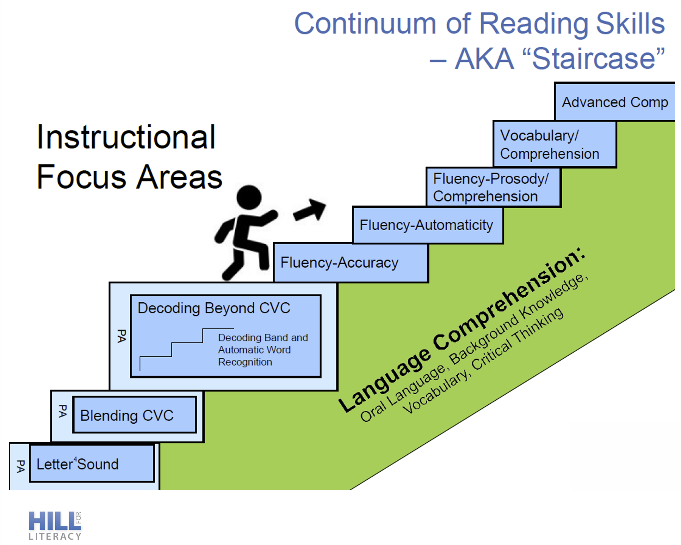
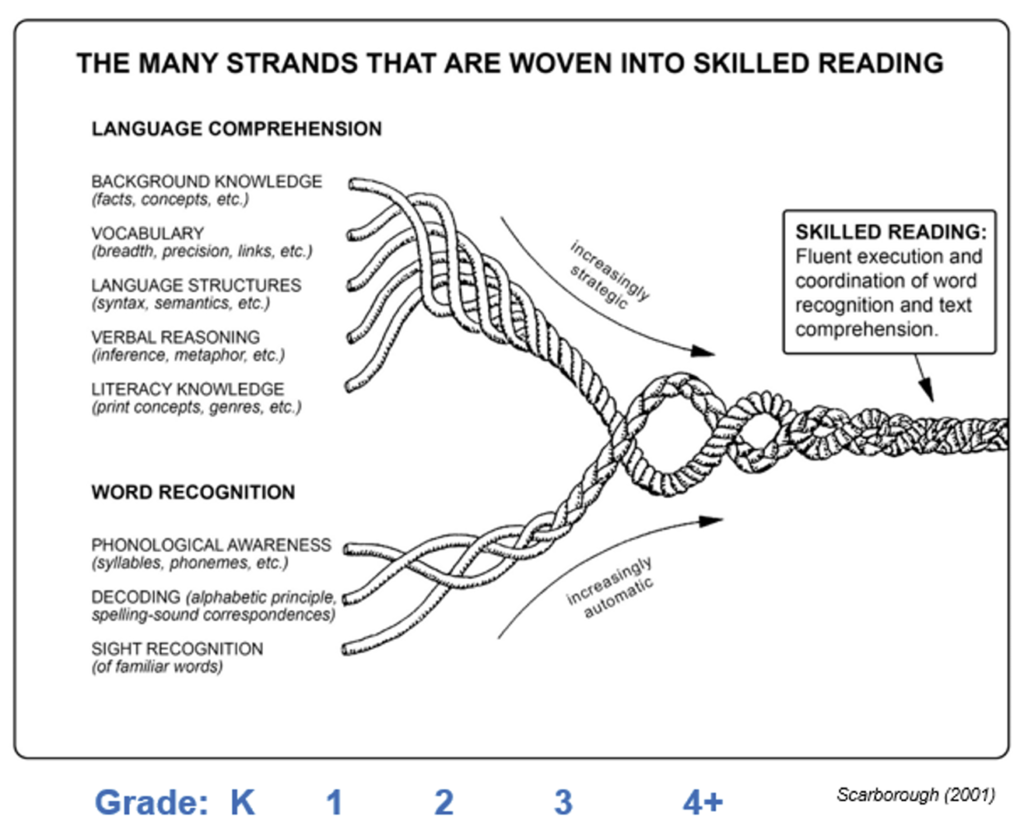
Phonological and phonemic awareness are necessary components in learning to read. The ability to detect, think about, and manipulate phonemes is predictive of reading success (phonology). Next, proficient reading relies on automatic associations of sounds and letters. The alphabetic principle is key to learning to decode unfamiliar words. Repeated exposure to letter patterns and words builds automaticity helping students to become fluent readers and allows their cognitive resources to remain available for the reader to focus on meaning (orthography).
The ability to derive meaning from words, sentences, and texts at a listening level is referred to as language comprehension. To derive meaning from words, the reader needs vocabulary, knowledge, understanding of sentence structures, and the ability to infer what the author is implying.
Scarborough’s Reading Rope
UFLI
Overview Foundations Overview HO
Alignment to Common Core CC_UFLI_K2-alignment.pdf
Parent Resource Hub Parent Resource Hub | UF Literacy Institute
Geodes
Wit and Wisdom
Knowledge has a multiplier effect—the earlier you begin to build knowledge, the better you do academically in later years. English language arts lessons can integrate knowledge from science, history, geography, and other topics while students develop their reading and writing skills and expand their vocabulary. Wit & Wisdom’s approach to ELA allows students to build both skills and knowledge with every lesson.
The Connecticut State Department of Education (CSDE) in partnership with the State Education Resource Center has engaged with providers of high-quality instructional resources to develop alignment guidance for the CSDE English Language Arts (ELA) Model Curricula. The guidance documents provide information about how instructional content aligns with and supports the implementation of the CSDE ELA Model Curricula. The instructional materials referenced in the alignment guidance documents meet the expectations of Connecticut legislation and Connecticut’s Approved K-3 Reading Curriculum Models or Programs. Strong alignment of instructional materials to the CSDE ELA Model Curricula units has the potential to support student engagement with meaningful grade-appropriate content.
Below are links that you can use to complete a crosswalk of the CT State Standards and Great Minds- Wit & Wisdom: